
Brian MacDonald
AI Engineer · Marketing Engineer · @BmacBuilds
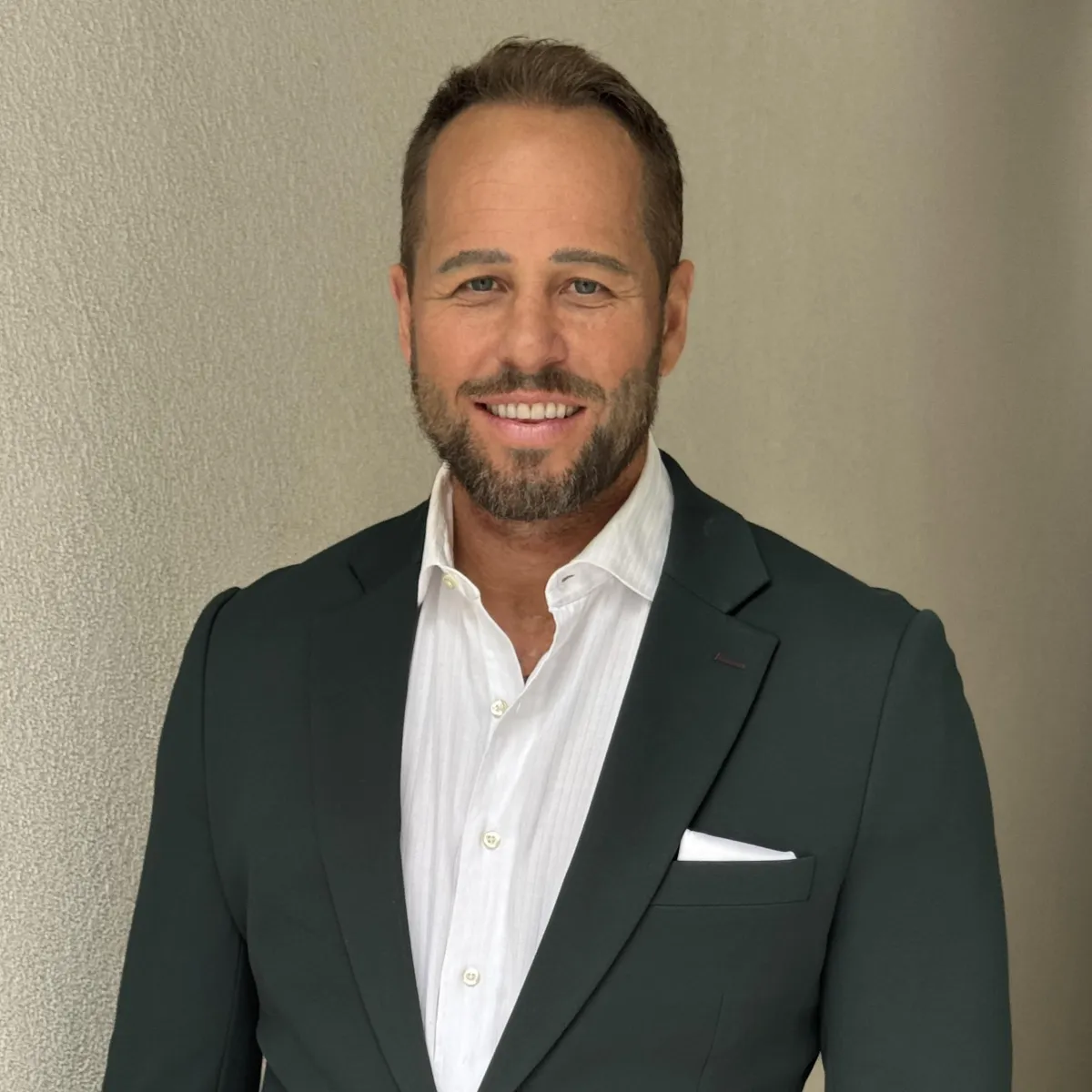
I'm an engineer. Over five months I designed, built and now operate a production AI platform on my own — 519,192 lines of first-party code, 7,704 commits, 3,737 passing backend tests, real customers billing through Stripe. No engineering team, no agency, no contractors. Every figure counted from the repositories and the production database rather than estimated, and the full accounting is public: the engineering record →
lines of first-party code
commits, about 57 a day
backend tests, all passing
months, one engineer
I grew up in Northern California in a family rooted in technology. I spent 8 years at American Express, built and exited an e-commerce business in my twenties, played professional beach volleyball, and ran marketing operations and lead-gen for dozens of companies in the years that followed. The thread never changed: build things that work, and build the marketing machine that grows them.
Somewhere in those years I noticed what the desk does. It builds the business and quietly takes the body — mine included. It also taught me the hard truth about most founder-led companies: the founder isn't running a business, they're running a very demanding job. If you can't leave for a morning without the revenue noticing, you don't own the machine. You are the machine.
So today I build machines. The platform is an AI coworker I built end to end, from the infrastructure up — built under the name Mavrick, which is being retired for trademark reasons, though nothing in the architecture depends on it. It is an AI sales agent that answers every new lead in under 20 seconds, qualifies, books, and follows up, natively in Slack, connected to the 3,200+ tools a modern team already uses. Around it I run a Claude Code command-and-control hierarchy: AI agents that execute the marketing operation on rails, with human approval on anything that spends money or talks to a customer. That's the freedom stack — and it holds because the guardrails hold, not because someone is watching it.
production database tables
serverless functions
API routes
integrations in production
Nobody hand-reviews half a million lines. What makes it safe to move that fast is the scaffolding, so here are the decisions holding it up:
- Cost is metered, not discovered. A hard spend cap and model tiering across the whole system — the cheap model does routine work, the expensive one runs only when it earns it. Spend is checked before the call and recorded after it.
- It asks before it acts. Anything that spends money or sends a message waits for a human's yes. The agent can never quietly do something you didn't approve.
- Idempotent by construction. A timeout is treated as indeterminate and reconciled rather than retried blindly, so a hiccup can never make it run the same job twice.
- Compliant by construction. Cold outreach follows the rules in code, not in a policy doc someone forgets.
- Proven by breaking it. No test counts until we deliberately reintroduce the bug and watch the test fail. 3,737 backend tests have been through that gate.
- Shipped, not slideware. It runs in production today, on real phone numbers, for paying customers.
It is the proof point for how I think AI belongs in a business: pointed at the money, integrated with the tools a team already uses, and engineered to last. The wedge was deliberate — start on the phones, where the value is obvious and the failure modes are unforgiving, then expand outward once the system has earned it.
Based in Orange County, California.